Linux内核
内核结构
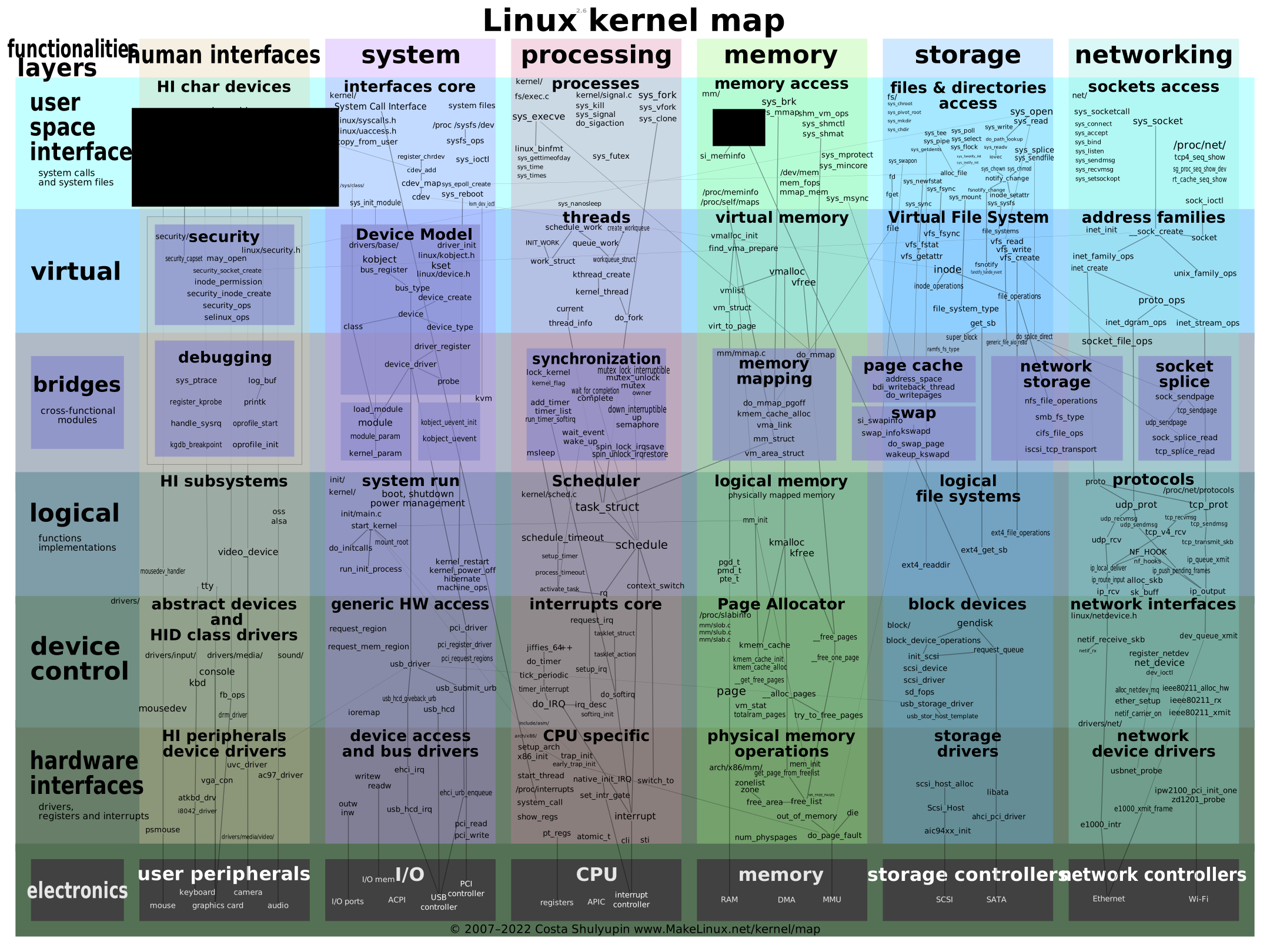
在这个架构图中 Linux被拆解为5个部分: 用户接口(human interfaces) 系统(system) 进程管理(processing) 内存管理(memnory) 存储管理(storage) 网络管理(networking)
而这五个部分又被分为7个层级:
用户空间接口(userspace interfaces)[这里面包含了系统调用和系统文件]
虚拟(virtual)[主要表示内核中的逻辑抽象]
桥接(briges)[连接转换不同的抽象层次]
逻辑层(logical)
设备管理层(device control)
硬件接口(hardware interfaces)
设备层(electronics)
human interfaces
编译内核
编译内核与模块
make all
安装内核与模块
  make INSTALL_MOD_STRIP=1 modules_install
  make install
生成initramfs
dracut --force --no-hostonly initramfs-6.12.27-barrensea.img 6.12.27-barrensea
内核参数(启动时)
当前内核的命令行参数/proc/cmdline
init: 运行制定的二进制文件作为init进程
initrd: 指定初始的ramdisk位置
cryptdevice: 指定dm-crypt加密分区位置与设备映射器名称
debug: 启动内核调试
lsm: 设置linux安全模块的初始化顺序
maxcpus: 将启用的最大处理器数量
mem: 强制使用特定数量的内存
netdev: 网络设备参数
nomodeset: 禁用kernel mode setting
acpi_os_name: 告诉 ACPI BIOS 操作系统的名称 格式:要伪装成 Windows 98:="Microsoft Windows"
acpi_osi: 修改支持的操作系统接口字符串列表
"Microsoft Windows XP"
"Microsoft Windows 2000"
"Microsoft Windows 2000.1"
"Microsoft Windows ME: Millennium Edition"
"Microsoft WindowsME: Millennium Edition"
"Windows 2001"
"Windows 2006"
"Windows 2009"
"Windows 2012"
"Windows 2015"
"Windows 2020"
内核开发
Linux内核开发与其他项目不同. 采用邮件列表的补丁式贡献.
Linux内核分为很多子系统 比如Hwmon dma等 每个子系统都有不同的维护者.
这里会介绍很多的LKML技巧
LKML技巧
使用git format-patch命令生成补丁.
生成最近一个提交的补丁:
git format-patch -1生成最近n个提交的补丁:
git format-patch -n这在邮件列表里对应的 PATCH[1/n] ... PATH[n/n]添加封面信:
git format-patch --cover-letter -5即为给多个提交的补丁系列添加一个[0/n]的封面信来介绍整个系列rfc:
git format-patch --rfc版本:
git format-patch -v2
通过
get_maintainer.pl获取需要抄送的维护者列表./scripts/get_maintainer.pl v2-0001-*.patch检查与发送根据列表发送邮件
git send-email --dry-run *.patch
git send-email \
    --to="platform-driver-x86@vger.kernel.org" \
        --cc="ilpo.jarvinen@linux.intel.com" \
            --cc="hdegoede@redhat.com" \
                v2-0001-*.patch
b4技巧
拉取整个补丁中所有的回复邮件
b4 mbox 20260623-pr-ratelimited-v1-0-cc922f544dc0@google.com
子系统
下面列出Linux的子系统
rust-for-linux
Rust for Linux 是把 Rust 语言支持引入 Linux 内核的项目,目标是在内核中编写更安全的驱动和基础设施代码。Rust 代码仍然运行在内核态,不是用户态程序;它需要遵守内核的内存、并发、错误处理和构建规则。
子系统/组件 |
位于源码目录 |
介绍 |
|---|---|---|
Rust support |
|
Rust for Linux 的核心支持代码 |
kernel crate |
|
提供给内核 Rust 代码使用的基础抽象,如设备、锁、内存分配等 |
macros |
|
过程宏,用于模块声明、绑定生成等 |
bindings |
|
由 bindgen 从 C 头文件生成的 Rust FFI 绑定 |
alloc |
|
内核环境下可用的 Rust allocation 支持 |
uapi |
|
用户空间 ABI 相关绑定 |
samples |
|
Rust 内核模块示例 |
docs |
|
Rust for Linux 文档 |
Kbuild |
|
Rust 编译、版本检查、bindgen、宏展开等构建逻辑 |
Rust for Linux 相关配置常见选项:
配置项 |
作用 |
|---|---|
|
启用内核 Rust 支持 |
|
记录构建内核使用的 rustc 版本 |
|
启用 Rust 示例模块 |
常用构建命令:
make LLVM=1 rustavailable
make LLVM=1 menuconfig
make LLVM=1
rustavailable 用于检查当前工具链是否满足内核 Rust 支持的要求。通常需要匹配内核文档中指定版本的 rustc、bindgen、rust-src 和 LLVM/Clang。
Rust 内核代码的主要特点:
不能使用 Rust 标准库
std,只能使用core、alloc和内核提供的抽象。通过
Result<T, Error>表示内核错误,错误值通常对应 Linux errno。与 C 内核接口交互时需要 FFI,底层绑定来自
rust/bindings/。unsafe仍然存在,但目标是把 unsafe 限制在小范围抽象内部。当前主要适合新驱动和较独立的内核模块,核心子系统仍以 C 为主。
驱动
子系统 |
位于源码目录 |
介绍 |
|---|---|---|
uniwill |
|
uniwill模具的驱动 |
platform/x86 |
|
x86平台相关笔记本/主板驱动 |
hwmon |
|
硬件监控,如温度、电压、风扇 |
input |
|
键盘、鼠标、触摸板等输入设备 |
HID |
|
USB/Bluetooth HID设备 |
LED |
|
LED设备与触发器 |
USB |
|
USB主机、设备、控制器驱动 |
PCI |
|
PCI/PCIe总线枚举与管理 |
ACPI |
|
ACPI表、事件、电源管理 |
I2C |
|
I2C总线与设备驱动 |
SPI |
|
SPI总线与设备驱动 |
TTY/serial |
|
终端、串口、控制台 |
netdev |
|
网卡与网络设备驱动 |
DRM/GPU |
|
显示、显卡、KMS图形栈 |
sound |
|
ALSA声卡与音频子系统 |
block |
|
块设备驱动 |
NVMe |
|
NVMe存储设备驱动 |
MMC/SD |
|
MMC、SD、eMMC设备 |
power supply |
|
电池、电源适配器、充电状态 |
thermal |
|
温控区域、散热设备、降频策略 |
内存
子系统 |
位于源码目录 |
介绍 |
|---|---|---|
memory management |
|
页分配、虚拟内存、swap、内存回收、mmap等 |
slab/slub |
|
内核对象缓存分配器 |
page cache |
|
文件页缓存,连接文件系统和内存管理 |
zswap/zsmalloc |
|
压缩swap缓存与压缩内存分配 |
cma |
|
连续物理内存分配,常用于DMA |
进程与调度
子系统 |
位于源码目录 |
介绍 |
|---|---|---|
scheduler |
|
进程调度器,如CFS、RT、deadline |
process management |
|
进程创建、退出、信号等核心逻辑 |
signal |
|
Unix信号处理 |
fork/exec |
|
进程复制与程序装载 |
cgroup |
|
资源分组、限制和统计 |
namespace |
|
pid、mount、user、net等命名空间 |
文件系统与存储
子系统 |
位于源码目录 |
介绍 |
|---|---|---|
VFS |
|
虚拟文件系统层,统一文件接口 |
ext4 |
|
ext4文件系统 |
btrfs |
|
btrfs文件系统 |
xfs |
|
xfs文件系统 |
procfs |
|
|
sysfs |
|
|
tmpfs |
|
基于内存的临时文件系统 |
block layer |
|
块层,请求队列、I/O调度、bio |
device mapper |
|
dm-crypt、LVM等映射设备框架 |
md raid |
|
Linux软件RAID |
网络
子系统 |
位于源码目录 |
介绍 |
|---|---|---|
networking core |
|
网络协议栈核心、skb、netdevice |
IPv4 |
|
IPv4协议实现 |
IPv6 |
|
IPv6协议实现 |
netfilter |
|
防火墙、NAT、包过滤框架 |
wireless |
|
cfg80211无线网络配置层 |
mac80211 |
|
802.11无线协议栈 |
bluetooth |
|
蓝牙协议栈 |
unix socket |
|
Unix domain socket |
eBPF |
|
内核可编程执行环境,常用于观测和网络 |
安全
子系统 |
位于源码目录 |
介绍 |
|---|---|---|
LSM |
|
Linux Security Module框架 |
SELinux |
|
SELinux强制访问控制 |
AppArmor |
|
AppArmor路径型访问控制 |
Smack |
|
Smack访问控制模块 |
keys |
|
内核密钥管理 |
integrity |
|
IMA/EVM完整性度量与验证 |
seccomp |
|
系统调用过滤 |
架构相关
子系统 |
位于源码目录 |
介绍 |
|---|---|---|
arch |
|
CPU架构相关代码总目录 |
x86 |
|
x86架构启动、异常、中断、页表等 |
arm64 |
|
ARM64架构支持 |
RISC-V |
|
RISC-V架构支持 |
boot |
|
各架构启动代码与镜像生成 |
中断、时间与同步
子系统 |
位于源码目录 |
介绍 |
|---|---|---|
IRQ |
|
中断描述符、中断处理、irqchip接口 |
timekeeping |
|
时钟源、定时器、时间维护 |
locking |
|
mutex、spinlock、rwsem等锁实现 |
RCU |
|
Read-Copy-Update同步机制 |
workqueue |
|
工作队列,异步执行内核任务 |
观测与调试
子系统 |
位于源码目录 |
介绍 |
|---|---|---|
tracing |
|
ftrace、tracepoints、事件跟踪 |
perf |
|
性能计数器与perf工具 |
printk |
|
内核日志输出 |
kprobes |
|
动态探针机制 |
debugfs |
|
调试用伪文件系统 |
KUnit |
|
内核单元测试框架 |
虚拟化
子系统 |
位于源码目录 |
介绍 |
|---|---|---|
KVM |
|
Kernel-based Virtual Machine虚拟化 |
virtio |
|
半虚拟化设备框架 |
vhost |
|
virtio后端加速 |
Xen |
|
Xen虚拟化支持 |
库与通用基础设施
子系统 |
位于源码目录 |
介绍 |
|---|---|---|
lib |
|
通用算法、数据结构、校验、压缩等 |
crypto |
|
内核加密算法框架 |
firmware |
|
内核内置固件相关文件 |
init |
|
内核初始化与启动流程 |
ipc |
|
System V IPC、POSIX消息队列等 |
module |
|
内核模块加载、卸载、符号解析 |